
Choosing a Film Camera
This article is part of the beginner’s guide to film photography, to see the entire guide, please click here: Film Photography Guide
Shopping
If you’re anything like me, shopping for cameras is the most enjoyable part of the process, aside from actually using them of course.
The question of what you want from your film photography experience should be the guiding force in choosing a camera, but we need to go through what different camera styles offer, before we can answer that question.
The King - 35mm
A good place to start is to briefly touch on film format.
You can find a full article delving into the film formats here:
Film Photography Guide – Film
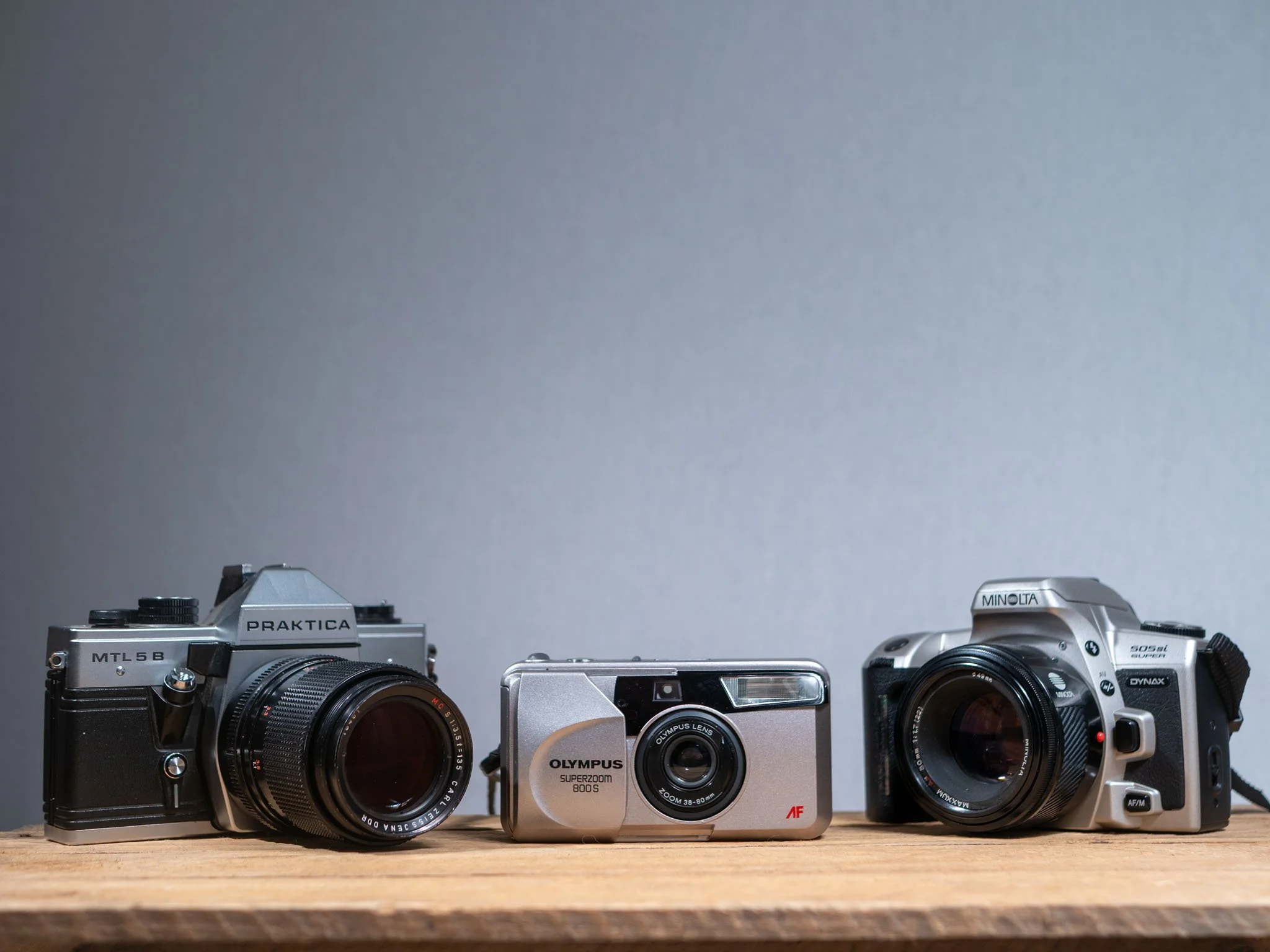
35mm film, also known as 135, is the standard. A good balance between quality, size, price and ease of use, it has been the standard for many decades at this point.
35mm film can be found in compact cartridges, which generally yields 24 or 36 shots.
The odds are that if you are gifted a film camera, or pick one up used, it’ll be a 35mm camera.
Medium Format - 120
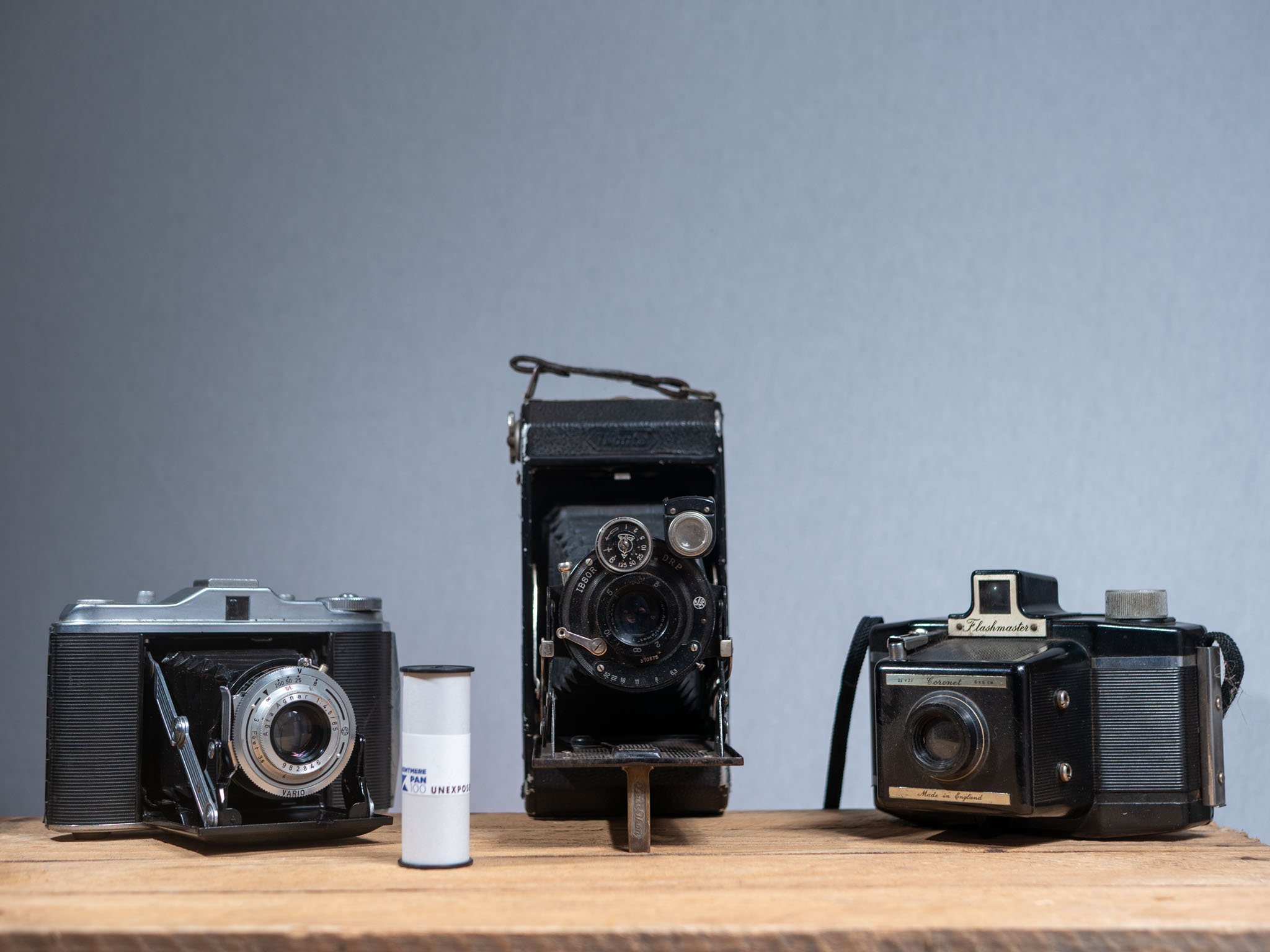
120 is the 2nd most common format, although it is a very distant 2nd place. It’s a much larger film format, which means higher fidelity is possible, but at a reduced shot capacity, and ease of use.
120 cameras tend to be larger, older, or vastly more expensive. Sometimes all three. 120 film comes on a roll, sealed with a light proof backing paper. They aren’t difficult to load once you’ve got used to it but are a little more intimidating than a 35mm camera.
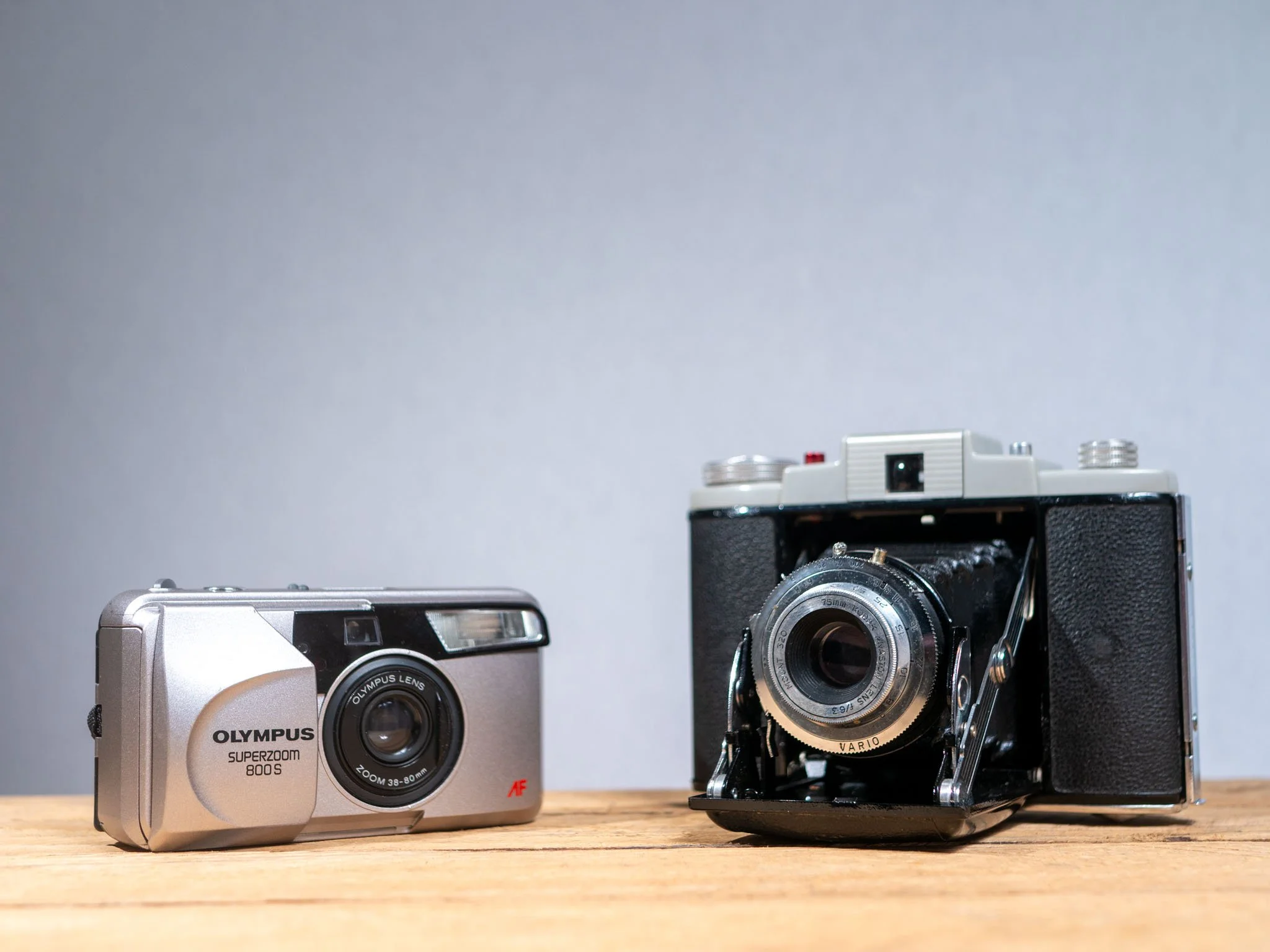
Point and Shoots
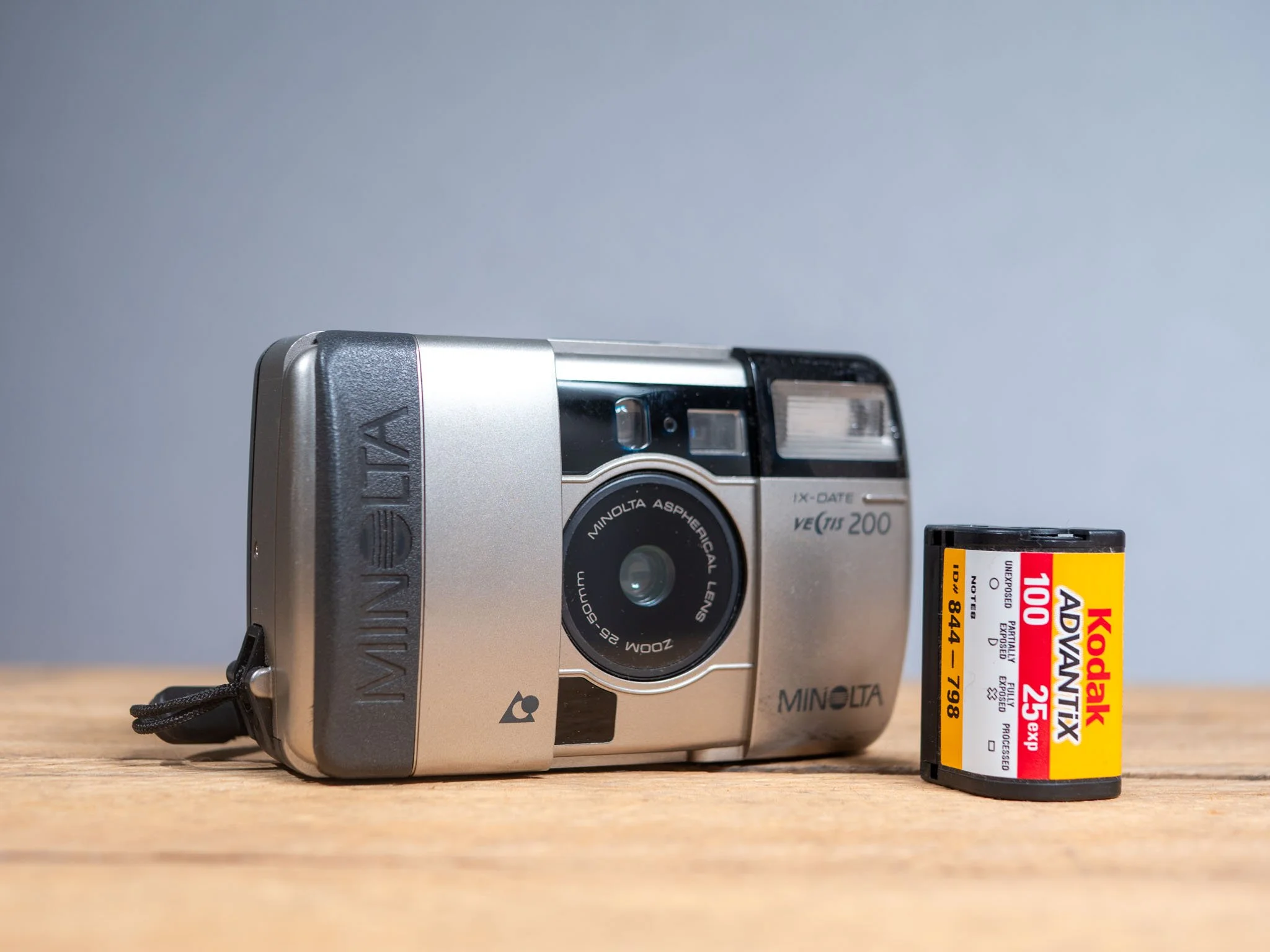
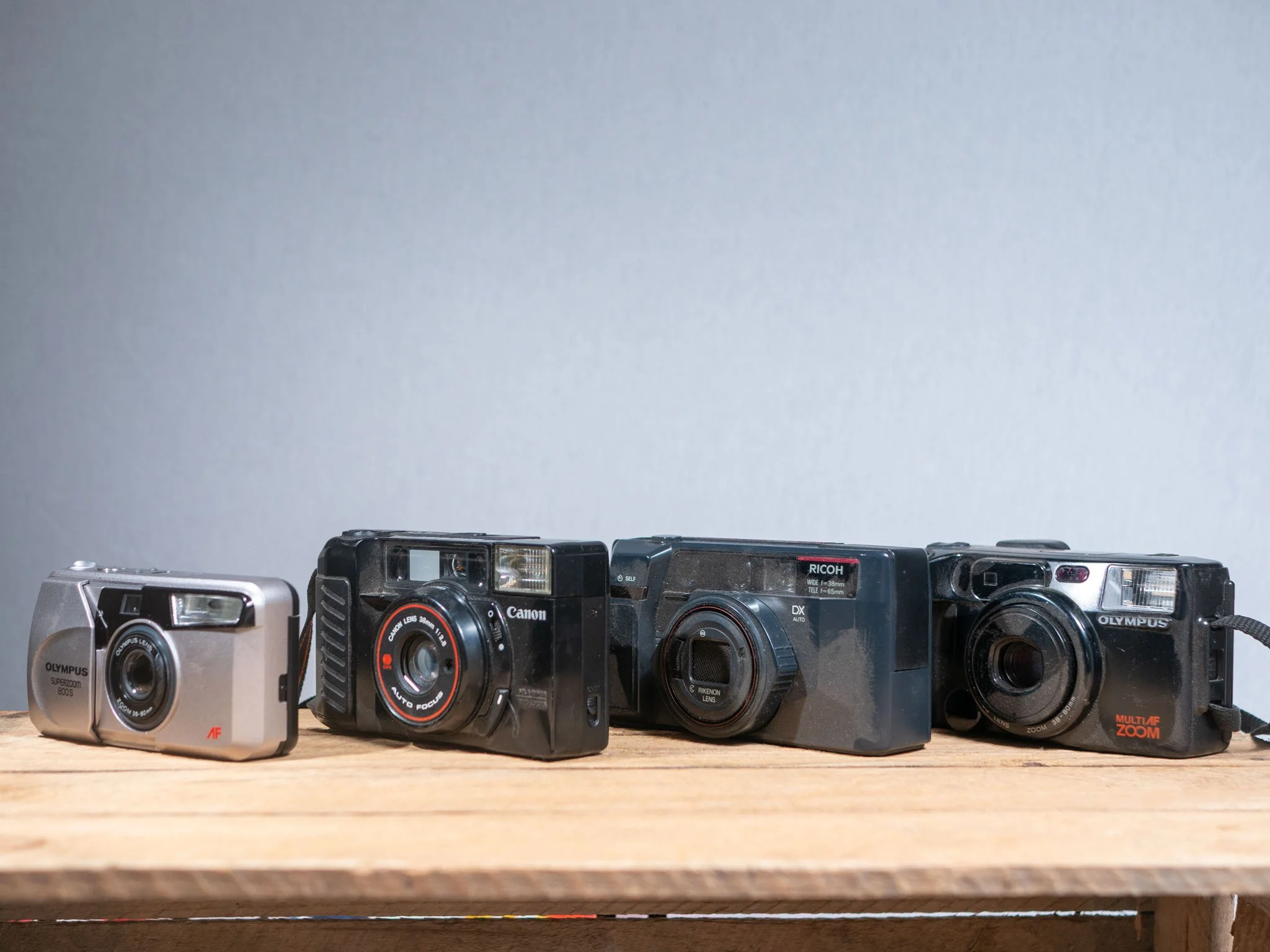
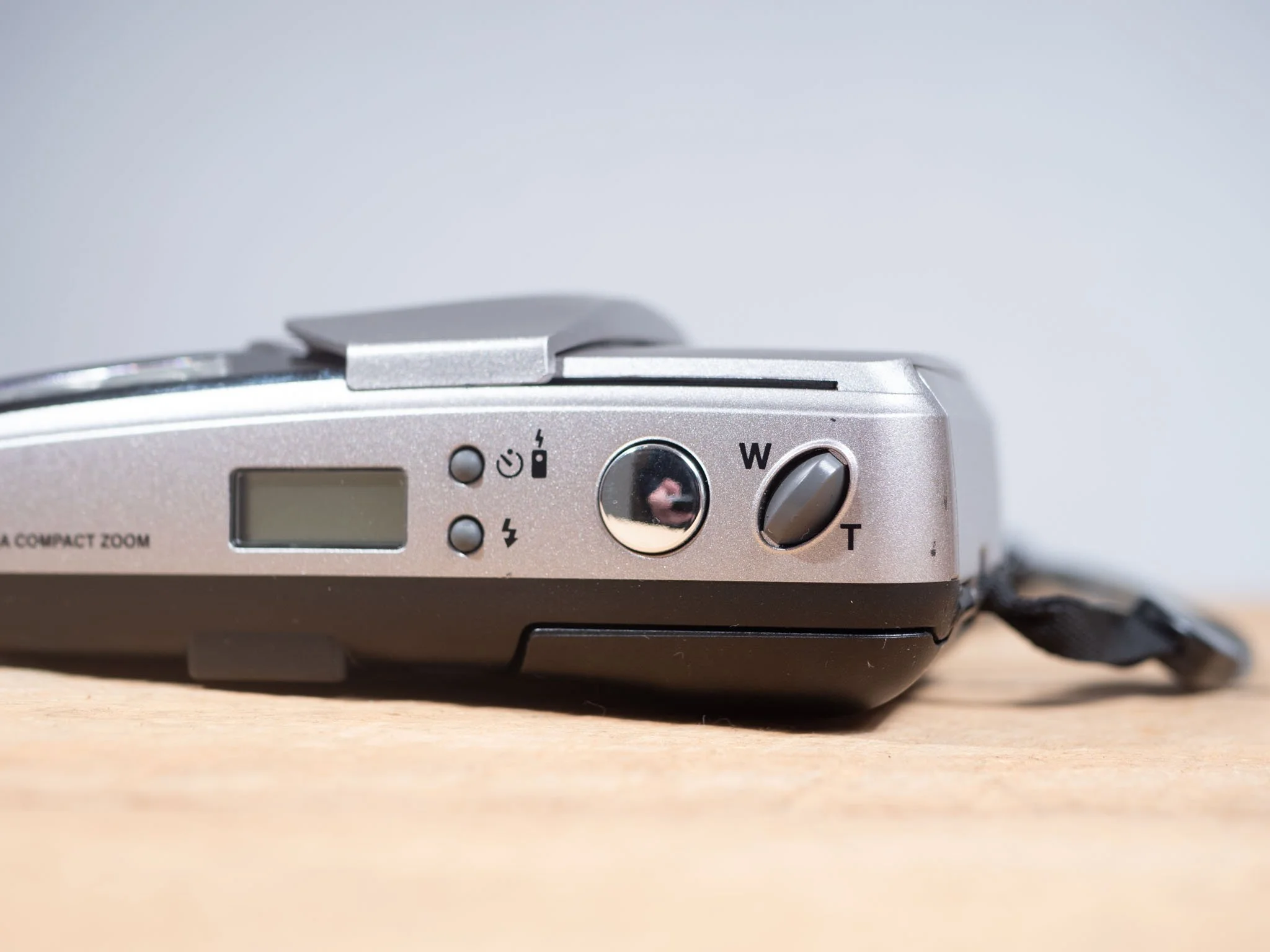
Point and shoots are as the name suggests, cameras where you point, and shoot. Minimal settings, generally auto everything, and the easiest film cameras to use.
These are great for those interested in the look of film, but without an interest in learning the ins and outs of the light triangle, and photography as a whole.
Point and shoots tend to be light and compact, and even the most basic models come with auto focus, and auto exposure.
Whilst they are the easiest to use, it doesn’t mean that they are magic. Slow films and low light don’t mix, so you will need to have a basic understanding of film types and their limitations.
For a full guide, please take a look at the film choice guide found below:
Film Photography Guide - Film
Prices vary wildly. It’s possible to get a perfectly good point and shoot camera for less than a roll of film, equally it's possible to spend a few hundred pounds on an especially popular model.
The auto everything is a blessing, but it can also be a curse. If you’re first adventures into film leave you with a desire to learn more about the fundamentals of photography, and how to balance settings, you’ll soon find the limitations of the point and shoot category. It is vanishingly rare to find a point and shoot that will allow you to manually change things such as shutter speed, or aperture, meaning you have no practical way of learning the effects of those parameters.
The same goes for focus, the vast majority of point and shoot cameras use autofocus, and auto focus only. How reliable that auto focus is varies, but if you are trying to focus on a specific point, something very close, or use focus in a creative way, then a lack of manual focus will be quite the limitation.
Point and Shoots
Point and shoots are as the name suggests, cameras where you point, and shoot. Minimal settings, generally auto everything, and the easiest film cameras to use.
These are great for those interested in the look of film, but without an interest in learning the ins and outs of the light triangle, and photography as a whole.
Point and shoots tend to be light and compact, and even the most basic models come with auto focus, and auto exposure.
Auto(ish) Exposure
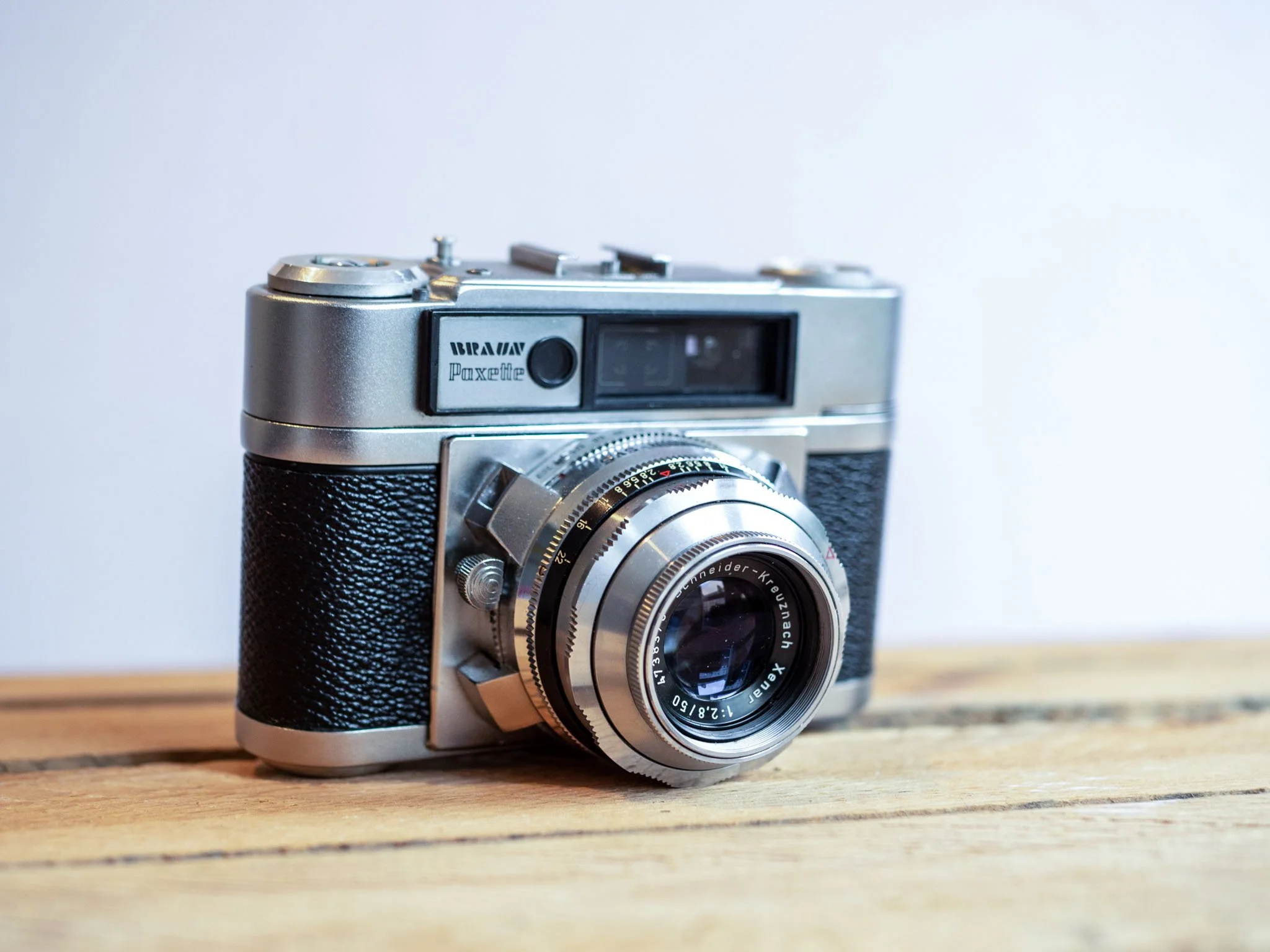
Some cameras that fall into these categories will have some form of auto exposure, however I would generally approach that auto mode with some scepticism, doubly so if the camera doesn’t need a battery.
These older cameras use a selenium powered light meter to calculate exposure. The benefit is that they don’t need batteries, the huge drawback is that they lose power over time, making the auto exposure less and less accurate.
If you find yourself with a selenium camera, I’d advise doing some tests with the auto mode, and specifically at a variety of film speed settings. I tend to find that most selenium light meters are about 1- 2 stops off, meaning if you set ISO 100 film, as if it where ISO 200 or 400, you end up with better results.
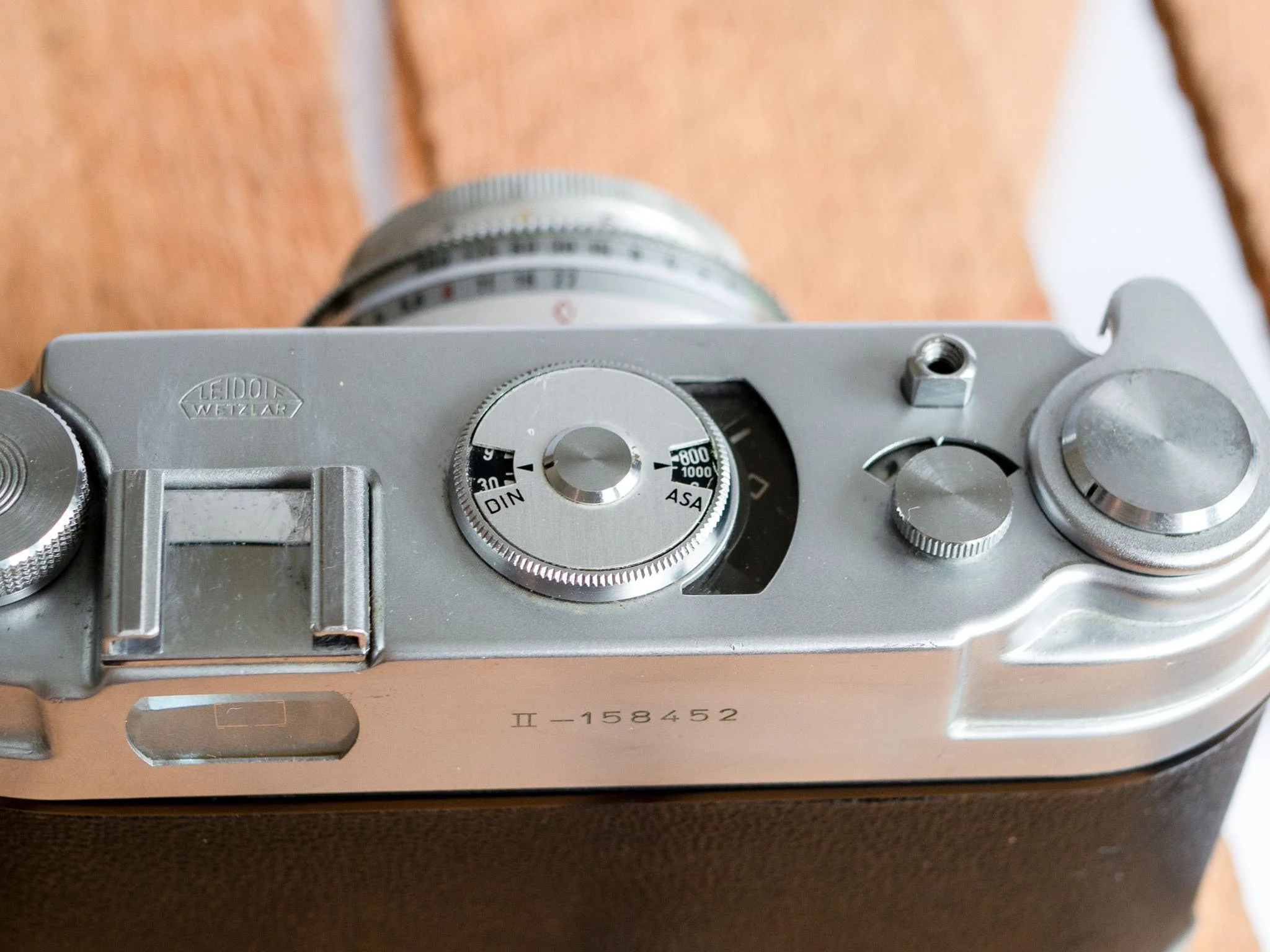
The more modern rangefinders have battery powered light meters, which tend to work really well. The earlier ones have often have no light meters, so you’ll need to use a light meter app on your phone, an external light meter, or guestimate with the sunny 16 rule.
TLRs
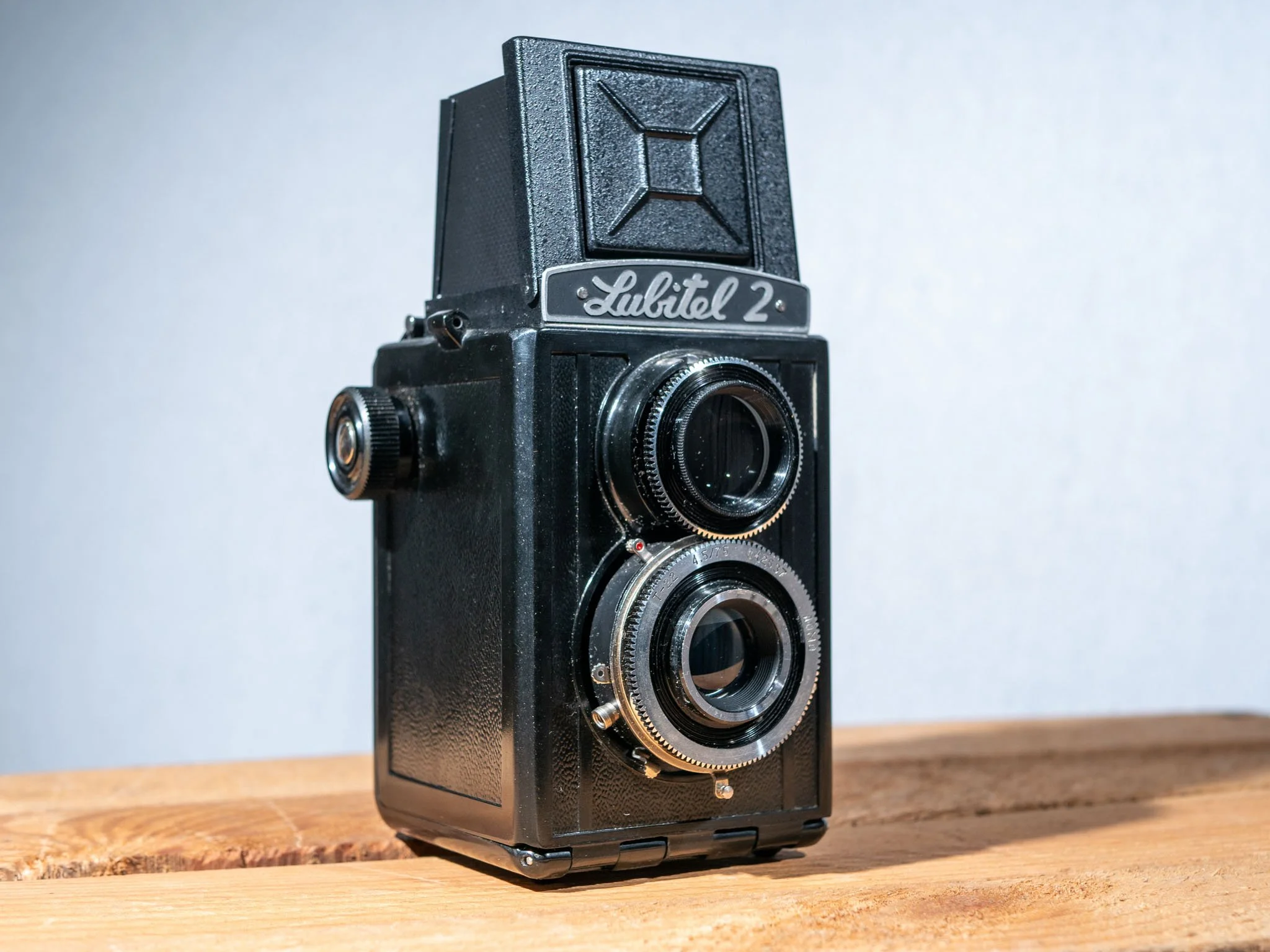
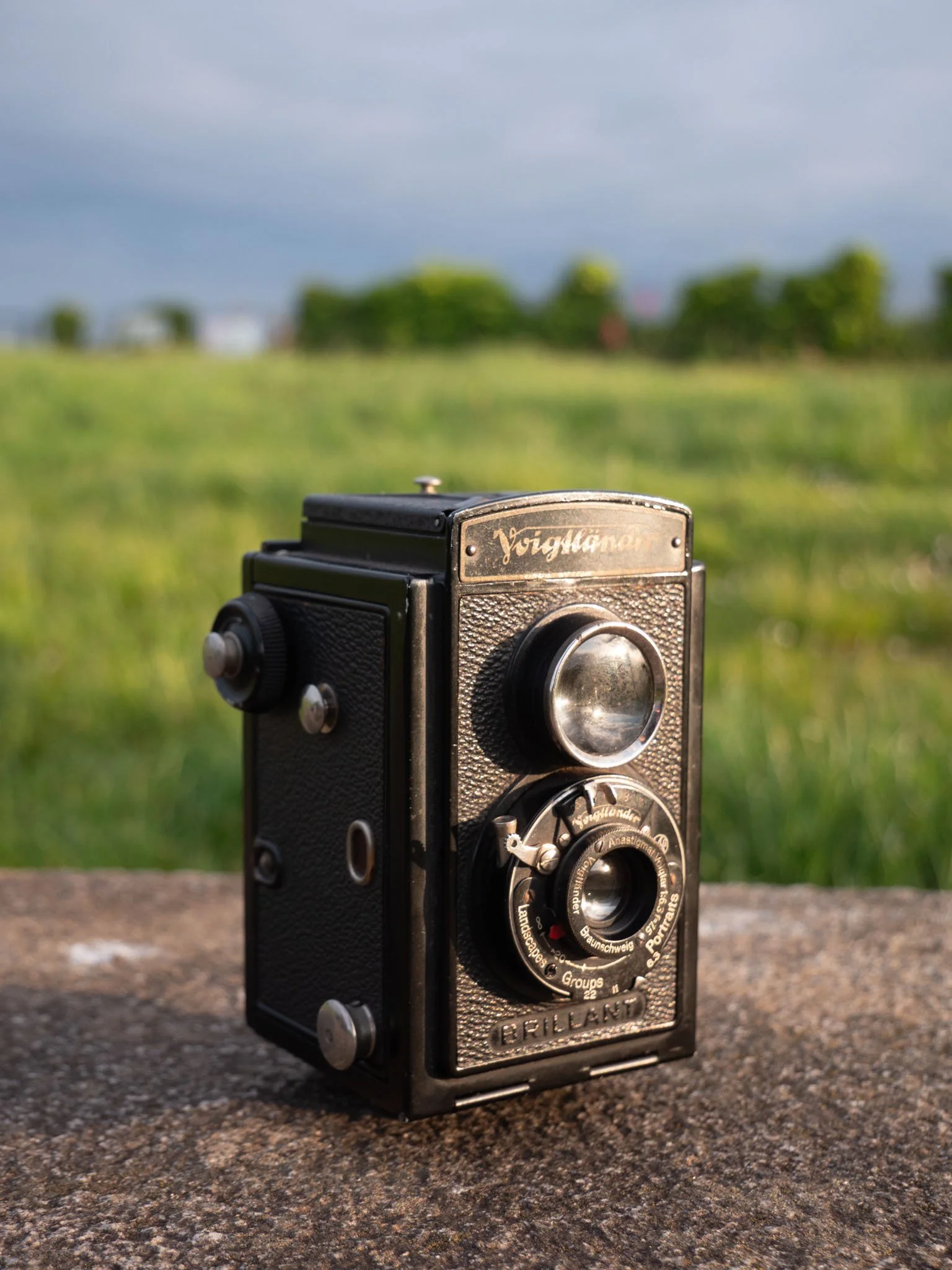
Twin lens reflex are similar to SLR cameras, except they have two lenses. Whilst SLR cameras have one lens that you both look through, and take the shot through, with TLRs you look through one lens, and the shot is taken via the other, identical lens.
This means that you aren’t technically seeing exactly what you’re getting, but in functional terms you are, as long as the camera is in good working order. This means you can be assured of focus, and composition.
TLR’s tend to be bulky, and skew on the more pricey side. They almost exclusively use medium format 120 film. Combined with being assured of focus, and the ability to use some very pleasing optics, this means you can get some truly incredible results.
The cost of this is the very literal cost, as well as the bulkiness and all manual nature of these cameras.
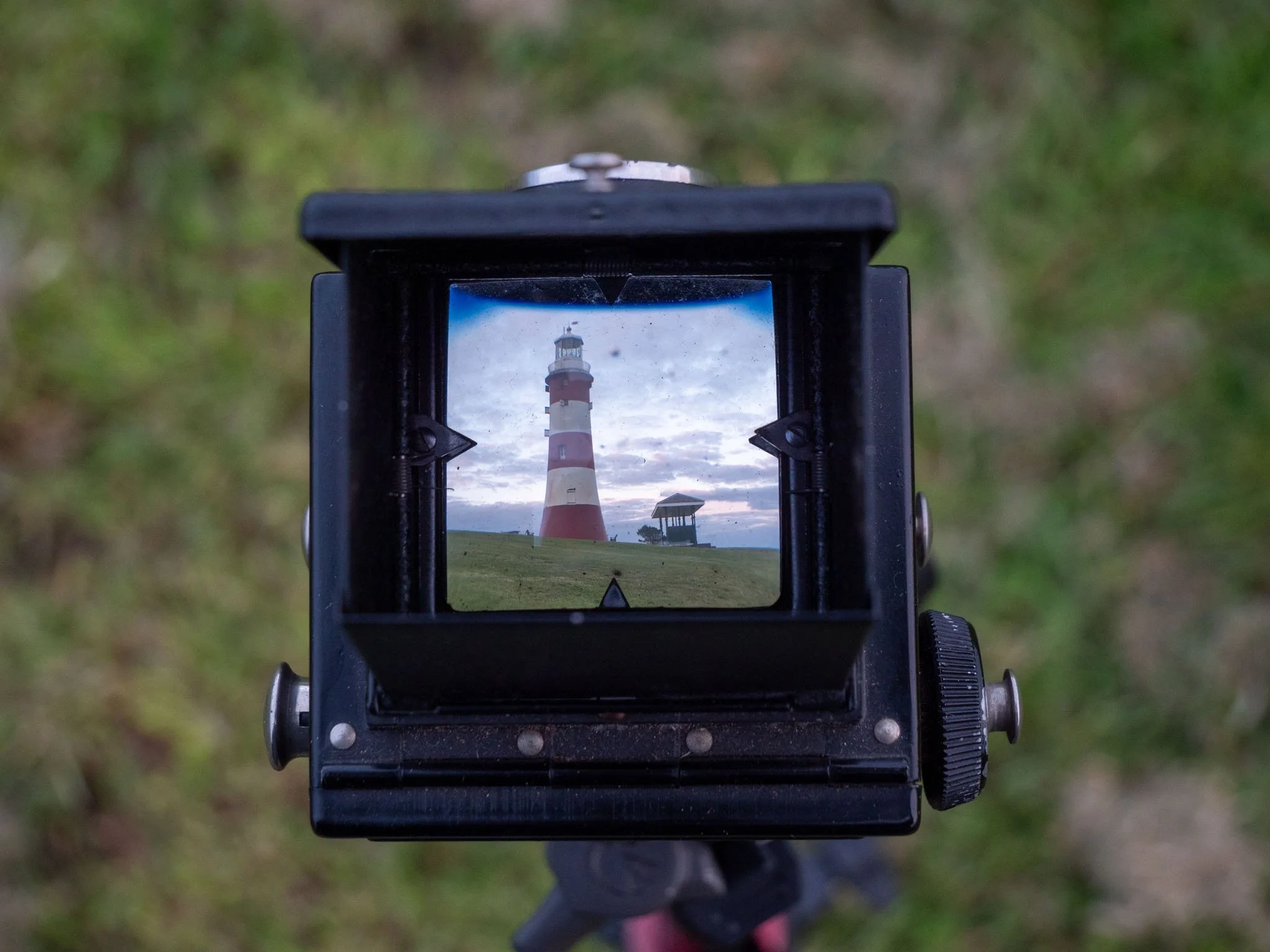
Almost all TLR’s use a waist level viewfinder, where you look down onto the camera, to compose your image. This makes it a little more subtle in use, if street photography is your thing, but it does take some getting used to, as the image is flipped left to right.
Instant Cameras
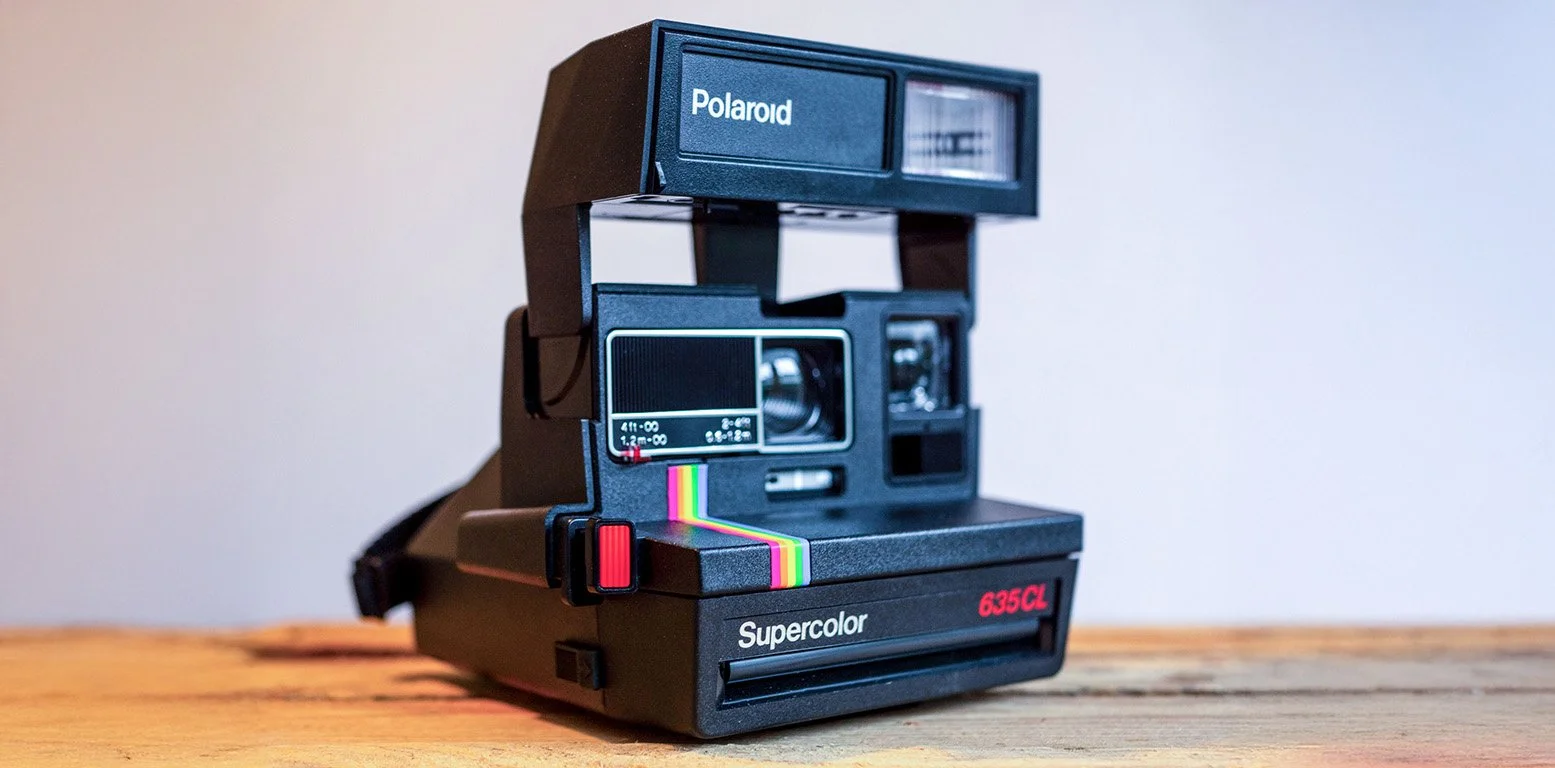
Polaroids are the ubiquitous example of an instant camera, but you can find instant cameras from other manufacturers.
These cameras don’t use film per se, so we won’t spend much time on them. They are fun to use, but are expensive to keep running, and the quality is never incredible. Then again you can’t beat seeing the shot you’ve taken within a few minutes.
The Others
There are a fair few other formats that are still in use, but are substantially less common, such as 110, 620, and large format cameras. Sourcing film for these cameras is possible, but should certainly not be your first outing in film photography.
The Dead Ones
Something that trips a fair few beginners up is the APS film format. APS looks rather similar to 35mm film, and was a short lived competitor in the late 90’s and early 2000’s. There are some funky and interesting APS cameras out there, but the film is no longer produced, and was last produced nearly 20 years ago.
This means that it is all but impossible to find working film for an APS camera, and makes it a very poor choice for modern day use.
To summarise, if you can see the dreaded APS logo on a camera, avoid it at all costs.
Camera Styles
Once you’ve decided on your chosen film format (likely 35mm), it’s time to decide on the style of camera you’d like.
Rangefinders & Scale Focus
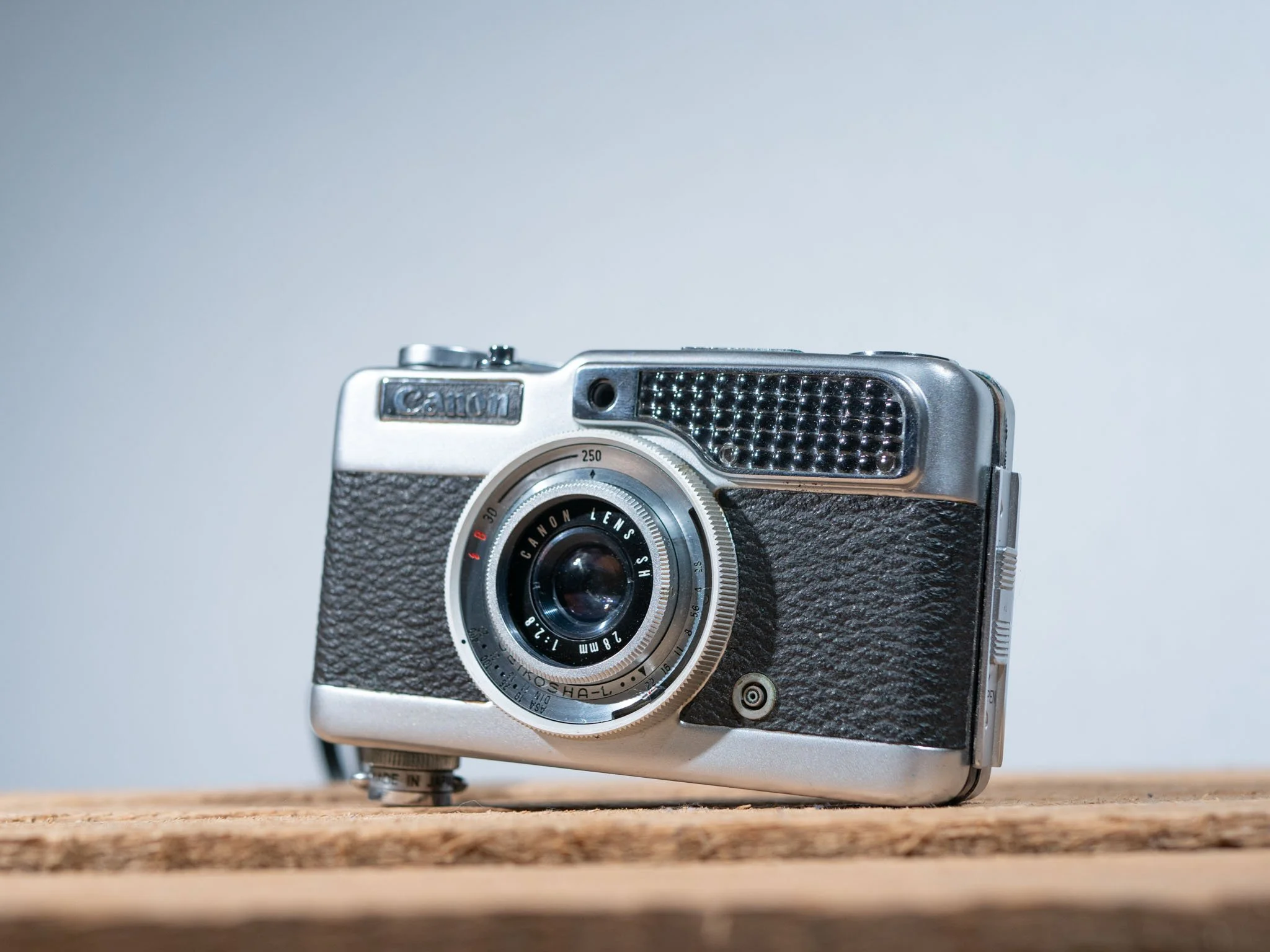
These cameras tend to fall into a similar camp as point and shoot cameras in terms of size, but skew much older, and as such have far fewer automatic features.
The lines also get a little blurry with this category, but a rough description would be:
• Relatively compact
• No auto focus
• Some form of system to aid with manual focus, but not one where you can directly see the image coming into focus.
The difference between rangefinders and scale focus cameras are how you estimate focusing.
Rangefinders allow you to estimate a distance, by looking through the viewfinder, and matching up two duplicate images, until they become one image. As long as the rangefinder is properly calibrated, you can get a nicely accurate range estimation.
Scale focus cameras look about the same, but have no direct method of measuring distance, you are instead required to estimate distance yourself, and then adjust the camera appropriately.
Initially I found this rather intimidating, but over time you tend to realise that most shots are fairly forgiving of focus.
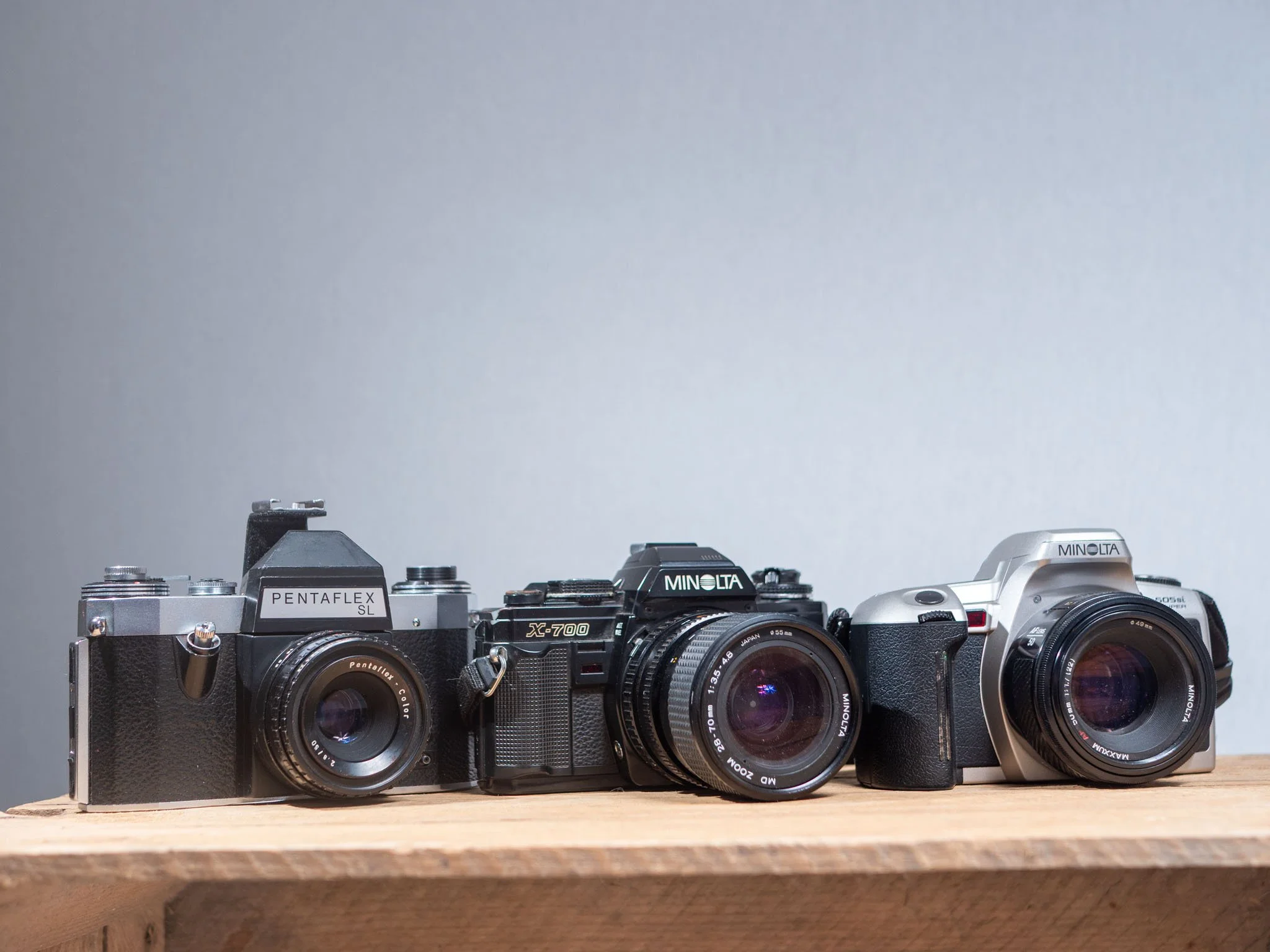
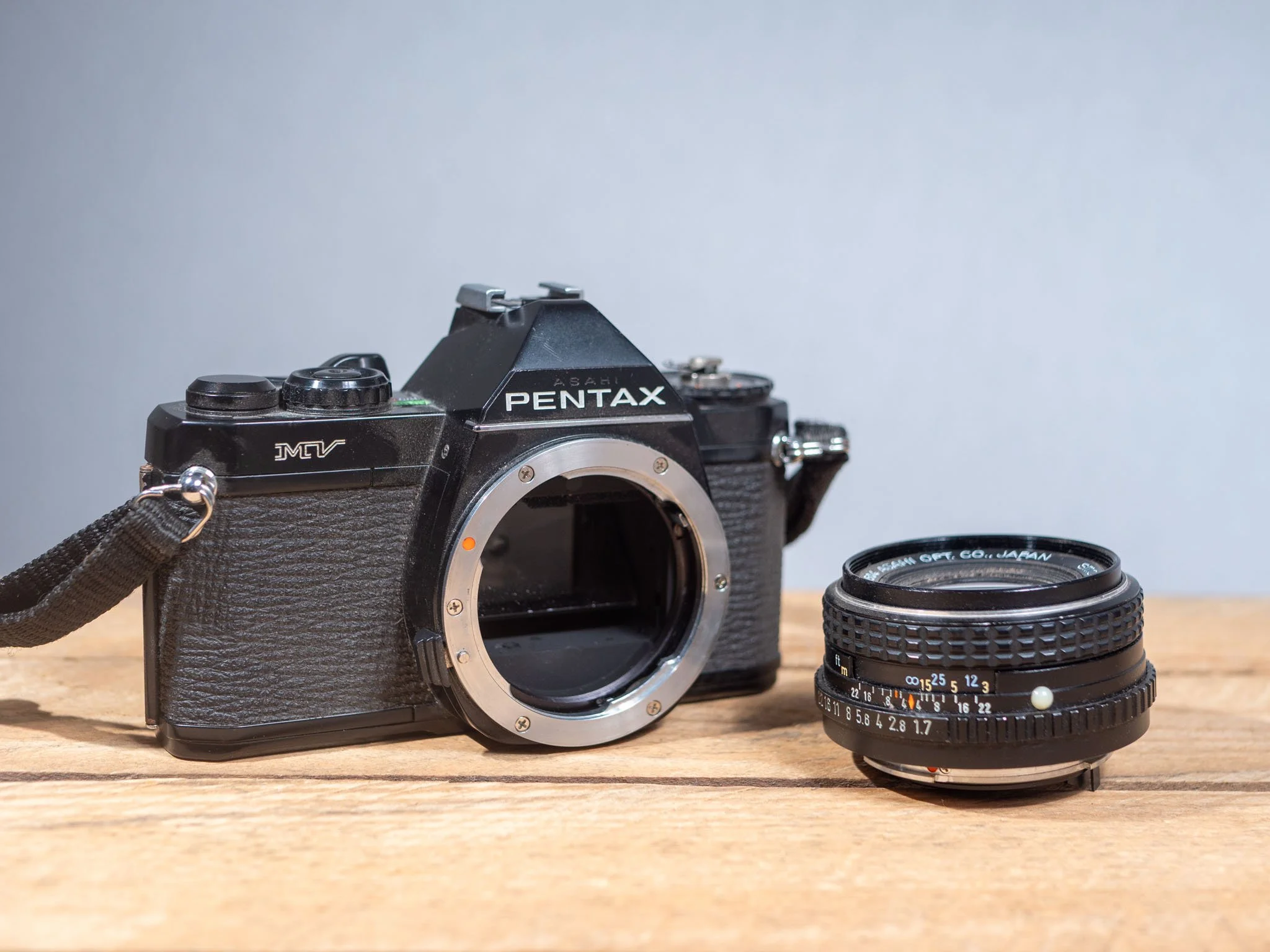
SLRs
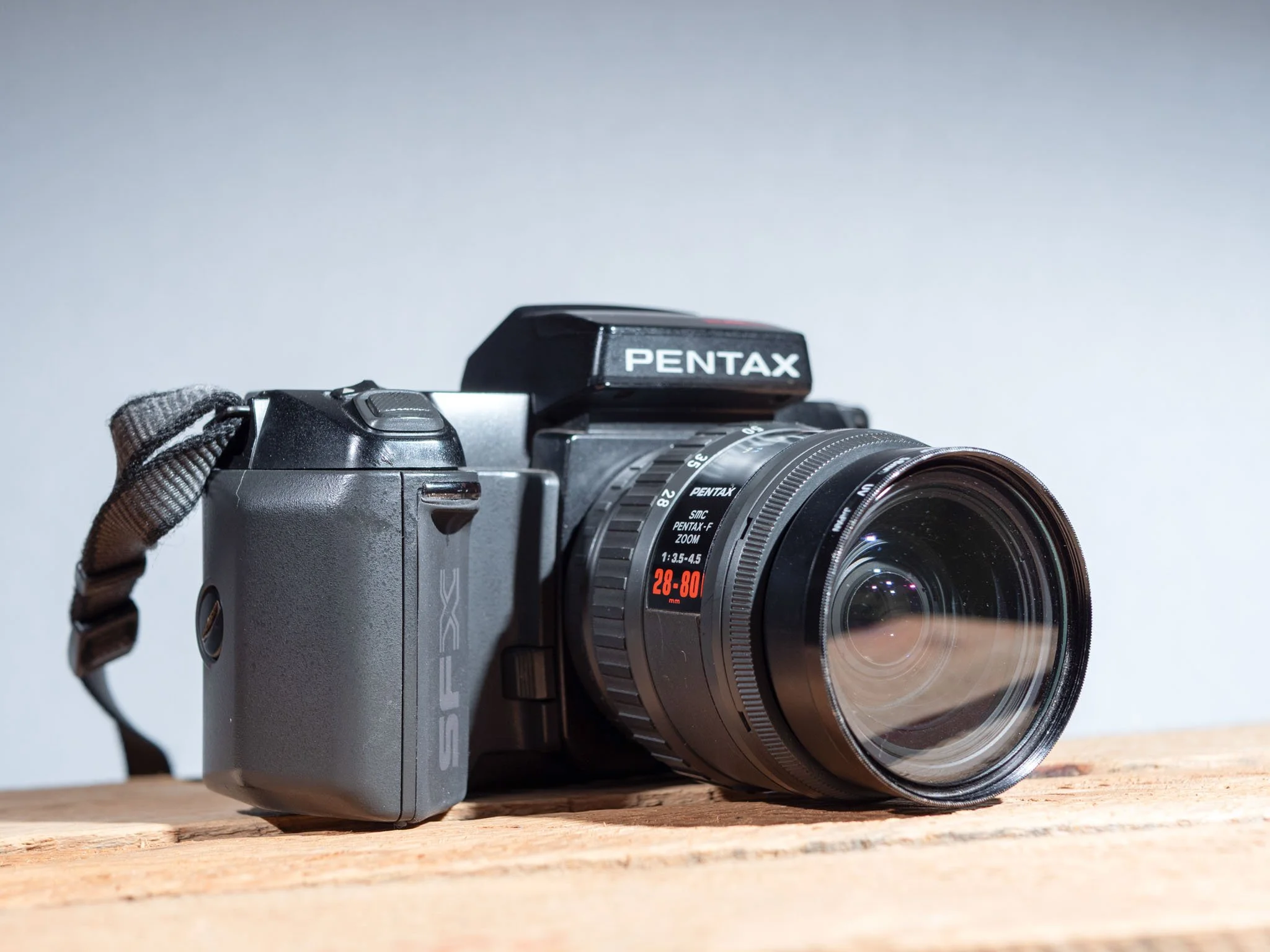
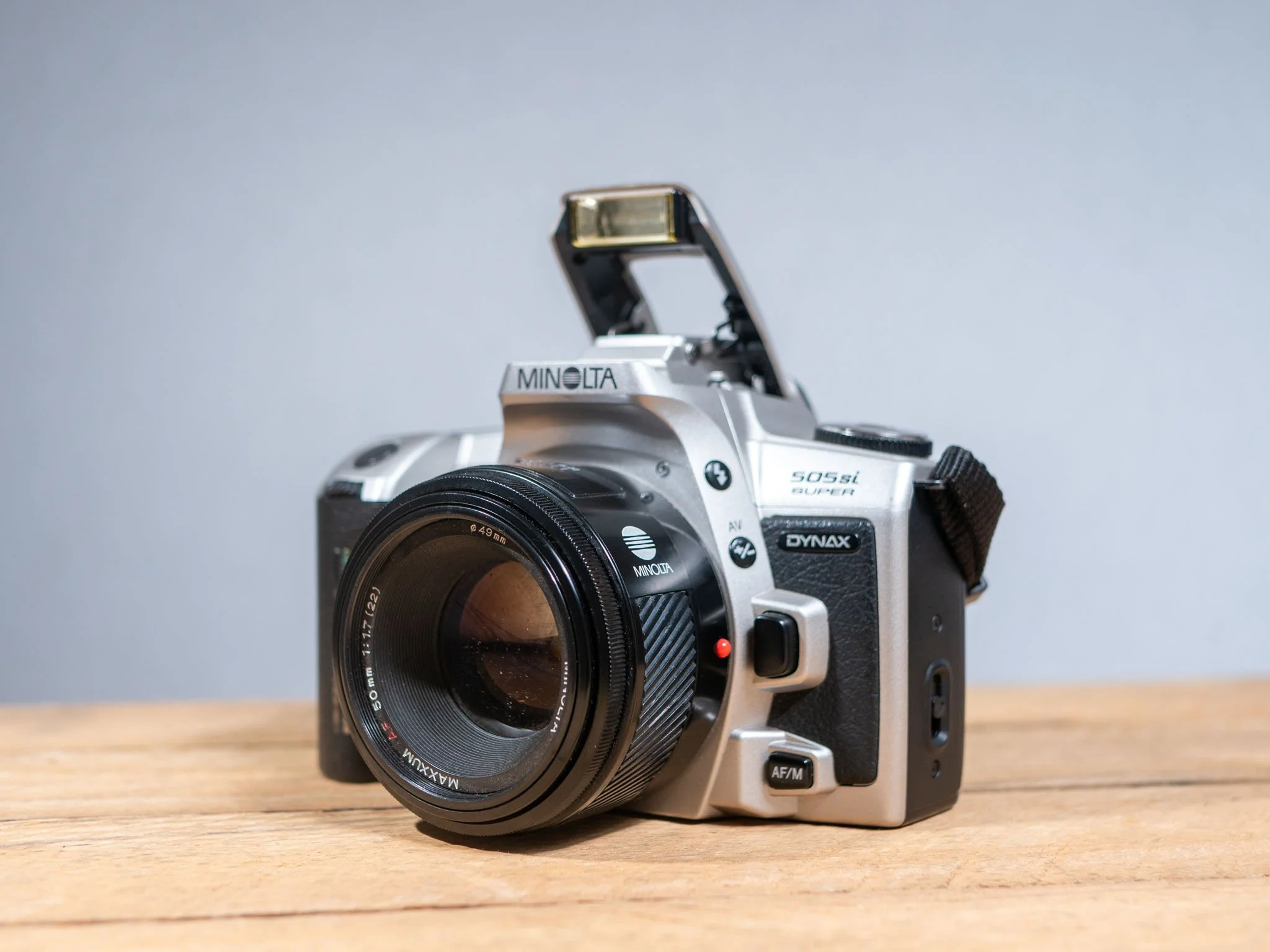
Single lens reflex cameras offer the greatest flexibility, and in many ways operate in a very similar way to modern DSLR cameras.
This category of cameras are identifiable by having interchangeable lenses (almost exclusively). This allows you to swap out lenses and trade a nice and flexible zoom lens, for a prime portrait lens, or a huge telephoto lens.
SLR’s have a moveable mirror in them, which means that when you look through the viewfinder, you are seeing what your film will “see”, meaning you can be assured of focus and composition, in a way that simply isn’t true with other camera types.
In terms of features, early SLR’s often have no light meter, and are entirely manual in their operation. As you get into cameras from the 1960’s, you start to see the introduction of basic light meters.
These ones fall into two categories. Earlier light meters tend to have a separate window through which they take their measurements, which means they read the general light levels of the scene, but not necessarily the part of the scene you are shooting. TTL (through the lens) light meters take their readings directly through the lens, meaning they are reading the light levels of the part of the scene you are actually shooting.
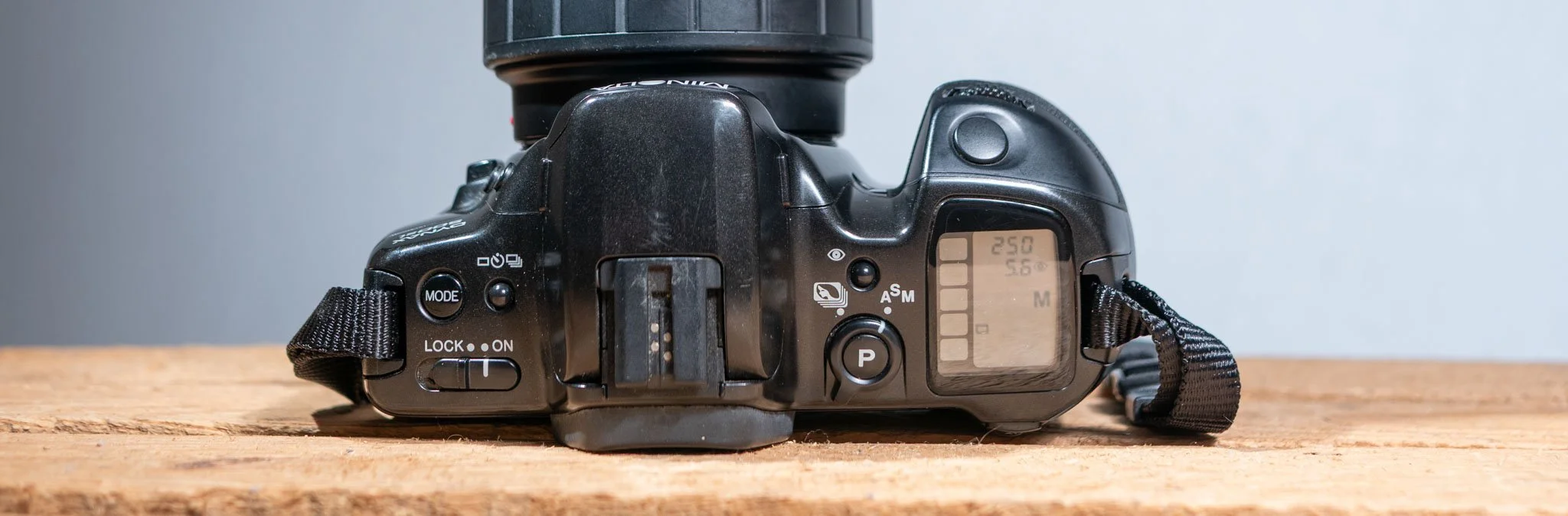
As the cameras get newer, you tend to unlock more features, moving from manual light meters to auto exposure, and from manual only focus to autofocus as well. As you get into the modern era of SLRs, you tend to end up with a camera that is only a stone's throw from a modern DSLR.
What's best for you?
Well, that depends on what you want from a camera.
If you’re after the film aesthetic, but aren’t too fussed about the technical side, then a point and shoot camera probably fits your needs best.
If you love the compact nature of point and shoots, but want a little more control, then scale focus and range finder cameras might be worth a look.
SLR’s offer the ultimate flexibility and the possibly of excellent results, at the cost of their size and weight. The early SLR’s offer a pleasing mechanical and manual experience, and are my go to. Later SLR’s offer a user experience not dissimilar to modern digital cameras, with the ability to have auto everything. All will give you the ability to learn and understand the technical side of exposure.
Early SLR’s and alter SLR’s have wildly different feels to them, but can generally achieve almost identical results.
TLR’s are great option, but probably not for beginners. Potentially offering the highest quality of images, but they are expensive, and require a good understanding of exposure to extract good results from.
Final Words
There's a lot of variety within film cameras, and a fair number of cameras which straddle the borders, or don’t fit neatly into any of the categories. There are other categories, such as the large format beasts, and pinhole cameras, but those deserve their own guide, and I don’t have the experience with them to write with any authority.
The important question is what you want from your adventures in film photography, whether it’s merely the film aesthetic, wanting to learn the fundamentals, or to simply experience a different pace of photography.
As for sourcing film cameras, you can peruse our film camera store, filled with tested and guaranteed cameras. You can pop over to eBay, or any of the local market places as well, although make sure to read descriptions fully.
Don’t spend a lot on your first camera, nor should you spend a lot on your first roll of film, once you’ve caught the bug, then start considering spending a little more.
The most important part is to have fun, so go do that!